Key takeaways
- Selecting the right Fully Automatic Bottle Capping Machine configuration ensures optimal performance for various bottle and cap types.
- Understand the importance of cap type, as different closures affect machine compatibility and handling.
- Communicate your production requirements clearly to ensure a Fully Automatic Bottle Capping Machine is tailored to your needs.
- A suitable configuration supports consistent closure performance, crucial for plants handling multiple formats.
- Consult with a Fully Automatic Bottle Capping Machine Manufacturer in India to evaluate container specifications before finalizing your choice.
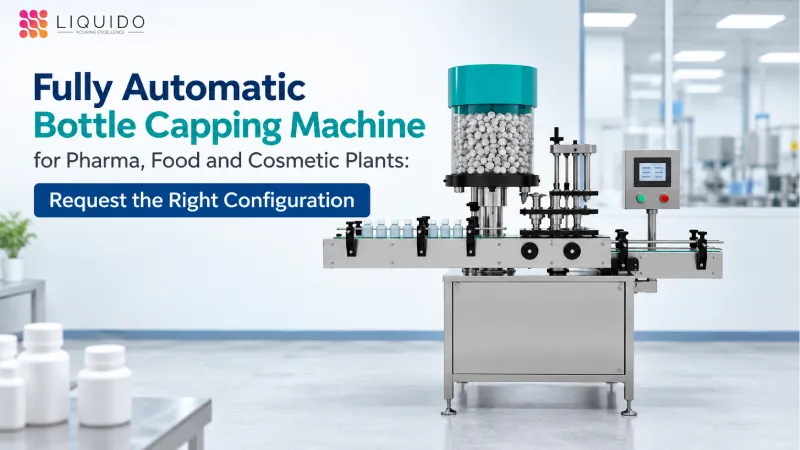
Packaging performance does not stop when a bottle is filled. The cap must be placed and tightened correctly for the finished pack to move smoothly through handling, storage, and distribution. A Fully Automatic Bottle Capping Machine can support this stage with less manual intervention, but the right configuration depends on the bottle, cap, closure method, and production requirements. For plants handling pharmaceutical, food, or cosmetic products, selecting the machine around these factors is a practical starting point.
Why the Right Capping Configuration Matters
Different products use different bottle shapes, neck finishes, and cap formats. A machine selected only on the basis of automation level may not provide the right fit for the actual packaging process.
The capping system should be matched to the container and closure before production speed becomes the main consideration. Cap feeding, placement, tightening, and bottle movement all need to work together.
A suitable configuration can also support more consistent closure performance across repeated production cycles. This becomes particularly important for plants handling multiple bottle and cap formats.
Consider the Cap Type First
The type of cap is one of the first points to discuss with a Fully Automatic Bottle Capping Machine Manufacturer. Screw caps, ROPP caps, press-on caps, and other closure formats can require different capping mechanisms and handling arrangements.
Before requesting a machine configuration, identify the closure used on each product SKU. Also consider whether the plant runs one cap format or several formats during regular production.
Common points to review include:
- Cap material and design
- Threaded or non-threaded closure
- Bottle neck finish
- Required tightening method
- Frequency of format changeovers
- Bottle and cap compatibility
This information gives the machine supplier a clearer technical basis for recommending the capping arrangement.
Bottle Specifications Should Guide the Machine
The bottle is equally important. A machine designed for one container format may require different handling arrangements when bottle dimensions or shapes change.
A Fully Automatic Bottle Capping Machine Manufacturer in India should be able to review the actual container specifications before finalising the configuration. Bottle height, diameter, neck dimensions, and overall shape can influence how the container is guided and positioned during capping.
For plants with multiple SKUs, it is useful to discuss all major bottle formats at the enquiry stage instead of evaluating only one sample.
Sharing real bottle and cap samples can make configuration discussions more precise. It helps the technical team understand the packaging combination that the machine needs to handle in production.
Match the Machine to Production Requirements
Automation should support the plant's actual workflow. A Fully Automatic Bottle Capping Machine may be used as a standalone unit or as part of a broader packaging setup involving filling, labelling, coding, and other equipment.
Before choosing the configuration, consider:
- Identify the products and bottle formats that will run on the machine.
- Confirm the type and dimensions of the caps.
- Define the required production output for the packaging line.
- Review how often bottles, caps, or formats will change.
- Discuss whether the capper needs to connect with upstream and downstream equipment.
This approach helps B2B buyers focus on the complete packaging requirement rather than treating the capper as an isolated machine.
Pharma Plants Need a Carefully Planned Setup
Pharmaceutical packaging can involve multiple bottle sizes, closure formats, and controlled production processes. For such applications, the capping stage should be discussed together with the rest of the packaging line.
A Fully Automatic Bottle Capping Machine Manufacturer can evaluate the bottle, cap, production arrangement, and required automation before recommending the machine configuration.
The key is to communicate the intended application clearly. Product category, bottle format, cap type, expected output, and line integration requirements give the supplier the information needed to understand the project.
Food and Cosmetic Lines Also Have Different Needs
Food and cosmetic plants may work with a wide range of containers and closures. A bottle used for a food product can have a different closure requirement from a cosmetic bottle, even when both products appear similar from an equipment-planning perspective.
For this reason, a Fully Automatic Bottle Capping Machine Manufacturer in India should assess the specific packaging combination instead of relying on a standard configuration for every application.
For cosmetic production in particular, packaging presentation and closure consistency can be important parts of the finished product. In food packaging, compatibility between the bottle, cap, and capping process also needs careful consideration.
Request a Configuration Based on Your Actual Requirements
When approaching a supplier, a detailed enquiry can make the selection process more efficient. Instead of asking only for a machine model, provide the technical details that describe the intended application.
- Bottle samples or bottle dimensions
- Cap samples or cap specifications
- Product category
- Required bottles per minute
- Number of bottle sizes
- Number of cap formats
- Desired line integration
- Expected frequency of changeovers
A clear specification gives the supplier a stronger basis for recommending the right machine arrangement.
This is especially useful when a production plant needs to handle more than one packaging format.
Why Choose Us
At Liquido we focus on filling, capping, and labelling machinery designed around real production requirements. Our approach is to understand the product, container, cap, and desired output before recommending a configuration. As a Fully Automatic Bottle Capping Machine Manufacturer, we can discuss standalone capping requirements as well as integration with other packaging equipment. Our team works with manufacturers across sectors such as pharmaceuticals, food, cosmetics, and other industrial applications.
Conclusion
Choosing a Fully Automatic Bottle Capping Machine should begin with the packaging requirement, not simply the automation level. Cap type, bottle dimensions, required output, changeover needs, and integration with the existing line all play a role in selecting a practical configuration. Working with a capable Fully Automatic Bottle Capping Machine Manufacturer in India can make this evaluation more focused and application-specific. At Liquido, we discuss these requirements with buyers so the proposed capping setup is aligned with the bottles, caps, and production environment they actually use.
Ready to discuss the right capping configuration for your pharma, food, or cosmetic plant? Contact Liquido today at +91 98000 05293 or email info@liquidofill.com with your bottle, cap, and production requirements to discuss the appropriate machine setup.
Need help choosing the right machine?
Talk to our engineers for a configuration matched to your product and line.
Frequently asked questions
A Fully Automatic Bottle Capping Machine is an industrial device used to automatically apply and secure caps onto bottles of various sizes and shapes. These machines are designed for high throughput in pharmaceutical, food, and cosmetic applications, ensuring consistent capping performance with minimal manual intervention.
Selecting the right Fully Automatic Bottle Capping Machine Manufacturer involves assessing their experience, technical expertise, and ability to customize machines based on your specific packaging requirements. It's important to provide detailed information about your bottle and cap specifications to ensure the manufacturer can recommend the best solution.
The cap type is crucial because different closure formats like screw caps, ROPP caps, or press-on caps require different capping mechanisms. Properly matching the machine to the cap type ensures efficient operation, minimizes errors, and maintains product integrity during packaging.
When approaching a Fully Automatic Bottle Capping Machine Manufacturer in India, provide details such as bottle and cap samples, product categories, required output rates, and packaging line integration needs. This information helps the manufacturer recommend the most appropriate capping configuration for your production setup.
Fully Automatic Bottle Capping Machines are particularly advantageous for pharmaceutical plants due to their ability to handle multiple bottle sizes and closure formats while ensuring stringent compliance with safety and quality standards. These machines enhance efficiency, reduce manual errors, and support consistent product quality across production cycles.